


TGCT is more than a diagnosis, it’s everyday life
TGCT may not be life-threatening, but it can disrupt every aspect of daily life – turning simple tasks into challenges, affecting work and activities, and taking a real toll on both physical and emotional wellbeing. 3
For many people with TGCT, the prospect of surgery can feel overwhelming. Understanding your condition is the first step towards understanding the potential treatment options and what they mean for you. The more you understand your condition, the better equipped you’ll be to have informed conversations with your healthcare team and make decisions about your care. 1
Beyond diagnosis: what living with TGCT can mean
No two people experience TGCT in exactly the same way. Some people live with occasional symptoms, while others may face repeated treatment, ongoing pain or uncertainty about the future. 1
Tenosynovial giant cell tumour (TGCT) is a rare condition that affects the joints and surrounding tissues. 1
TGCT is usually nonmalignant (non-cancerous), but it can be locally aggressive and destructive. It can cause pain, limited range of motion, stiffness and swelling, which may have a significant impact on everyday life. Over time, it may also lead to joint damage. TGCT can occur at any age, with a typical age at diagnosis of 35–50 years. It can have lifelong effects on a patients’ daily function and overall quality of life. 1,3
You may also hear TGCT referred to by its older names, including pigmented villonodular synovitis (PVNS) and giant cell tumour of the tendon sheath (GCT-TS). Localized TGCT most commonly affects the hand and wrist. Diffuse TGCT most commonly affects larger joints such as the knee, ankle and hip. 1,6
Whatever your experience, you’re not alone – and understanding how TGCT can affect everyday life can help you have more informed conversations with your healthcare team.
You may also find independent patient support resources helpful, such as TGCT Support. *
* This organization [TGCT support] is an independent nonprofit. Their inclusion here does not indicate or imply endorsement of SynOx Therapeutics. SynOx Therapeutics does not control and is not responsible for the content of this website.


Ray Barlow
Chief Executive Officer

I am pleased to be part of such a dedicated team, with extensive combined experience of developing biological products through to approval and commercialisation. We are focused on the continued development of emactuzumab as a differentiated, next-generation treatment for patients with TGCT and other macrophage-driven pathologies around the globe. This is a critical and exciting stage of the company’s journey and we all look forward to pursuing our mission.

What Causes TGCT?
TGCT develops when a small subset of tumor cells in the affected tissue produces too much colony-stimulating factor 1 (CSF-1). This attracts large numbers of inflammatory cells, including macrophages, into the joint or surrounding tissue, contributing to tumor growth and inflammation. 1,3 TGCT is a rare and lifelong disease. 1,3 A nationwide study in the Netherlands estimated around 50 new diagnoses per million people each year. 2
TGCT can occur in two main forms: localized TGCT, which usually affects a smaller, more defined area, and diffuse TGCT, which can involve a larger area of the joint and may be more difficult to treat. 1,3 Your healthcare team can explain which type you have and what this may mean for your care.
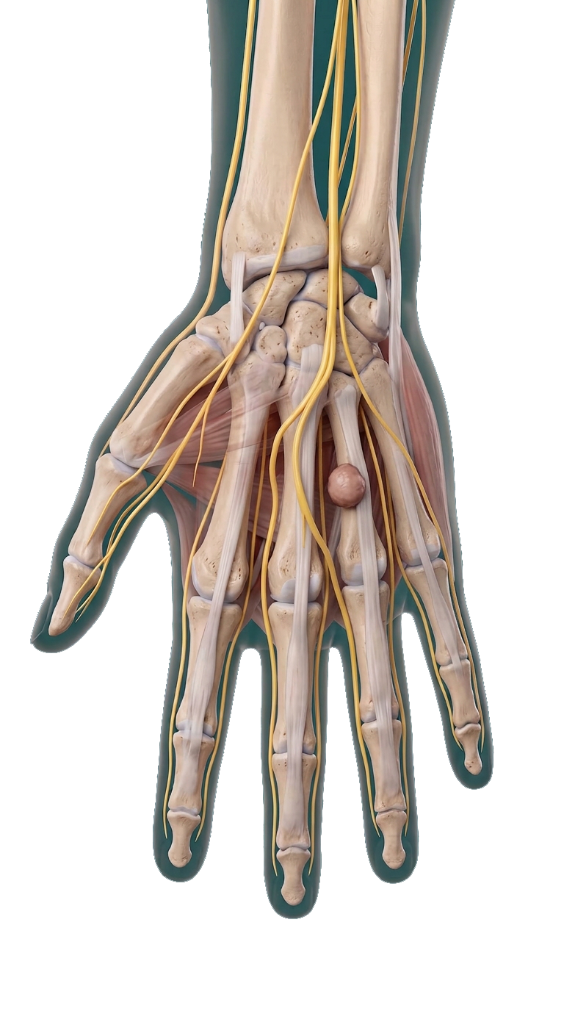
Localised TGCT
Localised TGCT is the more common form of TGCT and usually develops as a single, slow-growing lump or nodule. 1,3, 6
Because the tumor is usually well defined and limited to a specific area, people may notice a painless or mildly tender lump that gradually increases in size over time. Treatment often involves surgical removal, although the approach will depend on the location of the tumor, symptoms and individual circumstances. 1, 6
Localized TGCT can return after surgery, although recurrence is generally less common than with diffuse TGCT. 1,3, 6
Diffuse TGCT
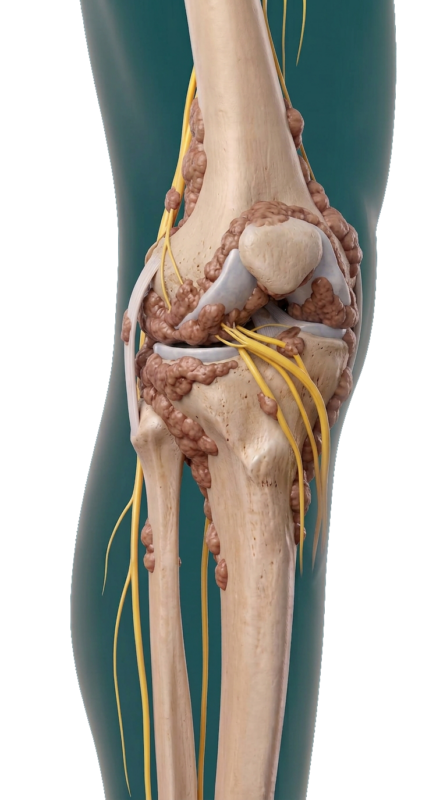
Diffuse TGCT, formerly known as pigmented villonodular synovitis (PVNS), is a more extensive form of TGCT that most commonly affects larger, weight-bearing joints. Rather than forming a single, well-defined nodule, the abnormal tissue can involve a wider area of the joint lining (synovium). This can lead to ongoing pain, limited range of motion, stiffness and swelling.1, 6
Because diffuse TGCT can affect a broad area of the joint, complete surgical removal may be challenging and the condition has a higher risk of recurrence than localised TGCT.1, 6
Impact on the patient
For the person living with TGCT, it can quietly reshape everything – the walk to the car, a night’s sleep, the confidence to say yes to plans. Behind every statistic is someone whose ordinary life now takes extra planning, extra effort, and extra courage. 3
83% OF PATIENTS REPORT THAT PAIN INTERFERES WITH DAILY LIVING 3
Pain is one of the most commonly reported symptoms of TGCT and can affect everyday activities, work, sleep and overall wellbeing.
64% OF PATIENTS REPORT LIMITED RANGE OF MOTION 4
Limited range of motion can make everyday activities more difficult, from walking and exercising to working and taking part in social activities.
UP TO 72% RECURRENCE AFTER SURGERY (DIFFUSE TGCT) 5
Pain is one of the most commonly reported symptoms of TGCT and can affect everyday activities, work, sleep and overall wellbeing.
Treating TGCT
For most people living with tenosynovial giant cell tumours (TGCT), surgery has been the main treatment option. Removing the tumour can ease pain, restore movement, and improve daily life. But surgery doesn’t always solve the problem. In many cases, TGCT can come back after an operation, and some people need more than one procedure over time. 1,6
Surgery also isn’t the right path for everyone. The tumour’s location can make it difficult to reach or remove completely. When TGCT wraps around a joint or sits close to delicate tissue, the operation becomes more complex and the risks can grow. Your overall health, the stage of your disease, and how the tumour affects you all play a part in whether surgery makes sense for you. 1,6
That’s why the continuing development of newer approaches matter. Alongside surgery, CSF-1R inhibitors are a class of targeted medicines designed to address the biological pathway that drives TGCT, rather than removing affected tissue. Emactuzumab is SynOx’s investigational CSF-1R monoclonal antibody. Following positive Phase 3 results from the TANGENT study, SynOx plans to submit regulatory applications in the US and Europe in the near future. Emactuzumab is not yet approved for the treatment of TGCT, and its safety and efficacy continue to be evaluated by regulatory authorities. 1,6
When you can understand how to manage TGCT, you reclaim something powerful: the ability to shape your care around the life you want to live.


(1) Stacchiotti S, et al. Best clinical management of tenosynovial giant cell tumor (TGCT): A consensus paper from the community of experts. Cancer Treat Rev. 2023;112:102491. doi:10.1016/j.ctrv.2022.102491
(2) Mastboom MJL, et al. Higher incidence rates than previously known in tenosynovial giant cell tumors: A nationwide study in The Netherlands. Acta Orthop. 2017;88(6):688–694. doi:10.1080/17453674.2017.1361126
(3) S. Stern, et. al., 08 Apr 2025, Localized and diffuse tenosynovial giant cell tumor: real-world results from a patient observational registry, Future Oncology, DOI:10.1080/14796694.2025.2488635;
(4) Gelhorn HL, Tong S, McQuarrie K, et al. Patient-reported symptoms of tenosynovial giant cell tumors. Clin Ther. 2016;38(4):778–793. doi: 10.1016/j.clinthera.2016.03.008
(5) Verspoor FG, Zee AA, Hannink G, van der Geest IC, Veth RP, Schreuder HW. Long-term follow-up results of primary and recurrent pigmented villonodular synovitis. Rheumatology (Oxford). 2014 Nov;53(11):2063-70
(6) Healey JH, Bernthal NM, van de Sande M. Management of tenosynovial giant cell tumor: a neoplastic and inflammatory disease. J Am Acad Orth Surg. 2020;4(11):e20.00028. doi:10.5435/JAAOSGlobal-D-20-00028